

My life is for music and not vice versa: Evgeny Bushkov
- INTERVIEW PERFORMING ARTS
 Life&More
- 0
- 6 minutes read

Saurabh Tankha
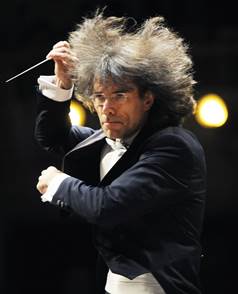
The winner of four major international violin competitions: Wieniawski (1986), Queen Elizabeth (1989), Tchaikovsky (1990) and Henryk Szeryng Foundation Award (1992), Evgeny Bushkov is one of the most interesting conductors around the world. Bushkov made his debut in 1999 in France with the Orchestra of the International Festival of Luxeuil and is, at present, the resident conductor of the Symphony Orchestra of India which he joined in January 2017.
The SOI Chamber Orchestra present Tango Tryst with Evgeny Bushkov (conductor), Dario Polonara (bandoneon) with Goa University Choir and The Bangalore Men on November 13 at Tata Theatre in Mumbai. The evening will bring to you the works of Astor Piazzolla and Martin Palmeri. The SOI Chamber Orchestra will perform the Palmeri’s Misatango along with Dario Polonara. This will be the Indian premiere of the Argentinian composer’s work. It blends elements of the traditional mass form with those of Argentinian tango.
A tete-a-tete with the Russian musician…
Tell us how and when did you join hands with Symphony Orchestra of India (SOI) and how has been the experience till now?
I first came to conduct the SOI in 2010 upon invitation of Maestro Marat Bisengaliev, the SOI artistic director whom I knew since the time we studied with the same violin professor at the Moscow Tchaikovsky conservatoire. Then I was re-invited the following year. Most recently, in 2017, when the SOI Chamber Orchestra consisting of resident musicians was to increase its activity I have been invited by Marat to come and work with it as conductor-in-residence.
An honest opinion on how do you rate the understanding of orchestra among Indians?
I do believe that there is strong division between audiences: there is one part, relatively small, of people who are amazingly educated and experienced in listening to symphonic music; and a very large part that doesn’t know much about it. However, I think that Western music performed by orchestra still make an impact on the latter. People are very open-minded and really curious about this new field of knowledge.
If you were to rate the crowd of cities in terms of understanding music during a show, which will be the top three cities in the world and why?
Moscow, Vienna, London… If to take Moscow of Soviet time, I would put it definitely to a first place. Not so sure about today… But since you ask about crowd, not specialists, I think that will be still an order of placing these cities. London and Vienna public know much more about music I believe than other capitals… Berlin maybe should share the third place with London. Traditions are very strong in those places. But Russian-Soviet audience was very different to the Western one. There were considerably less entertainment options, so people went to concert halls a lot and thus had much bigger experience, also being “spoiled” by listening to great musicians… But it is my personal opinion based on meeting people and hearing what they tell…
What/ who inspired you to make music?
I come from violinists’ family so music is in my genes… And then my teachers just “added oil” to my inner flame.
Could you briefly describe the music-making process?
Briefly? Hardly… It’s like to ask to describe briefly how to cook Indian food. (Smiles) There is a lot of ingredients, knowledge, intuition, artistry at last… And plus, for each musician there is a very personal process, one-of-a-kind… But for everybody, there are always such things as lots of work, stress before performance, then utmost concentration during performance, and much of dissatisfaction very often – after…
You were young when success arrived at your doorstep. How difficult was it to be level-headed to keep grounded and not let success take over?
There were different periods in my early life… But everything’s relative including success… For me, life is for music and not vice versa
Success is…
…being able to do what you love and to be in demand…
When did you decide that you wanted to take up music as a career and what was the reaction of your immediate family on the same?
From the very first steps in music at the age of five-and-a-half, I have never ever doubted it will be my path. So was the attitude of my parents.
In 2003, you founded an educational concert series for children. Please tell us more about it.
Inspired by Leonard Bernstein’s “Young people’s concerts” series, I decided to do my best in bringing thematic music programs to Russian-speaking young audiences. Later on those programmes began to change in order to fit ever-changing kids way of perception. I staged children operas, made concerts telling stories about larger symphonic works like, for example, R Strauss “Don Quichote”, made programmes with strong interactive audience participation, like composers duels…I try to do everything that would me myself interested if I were to come to such concerts…
What/ who has been your biggest challenge and have you been able to overcome that challenge? If yes, how?
The biggest challenge in my life was the moment when the left hand disease prevented me from continuing violin playing… By now, after almost 20 years of conducting experience I could probably say that I overcame that challenge, also having very much changed personally…
What would you be doing if you were not into a music career?
I have asked myself the same question many times, but… still no answer.
Your favourite musician…
In instrumental world, Yehudi Menuhin and in conducting, Carlos Kleiber.
