

‘Laapta Ladies’ steals your heart subtly
- ENTERTAINMENT REVIEWS
 Life&More
- 0
- 10 minutes read

Rajkumari Sharma Tankha
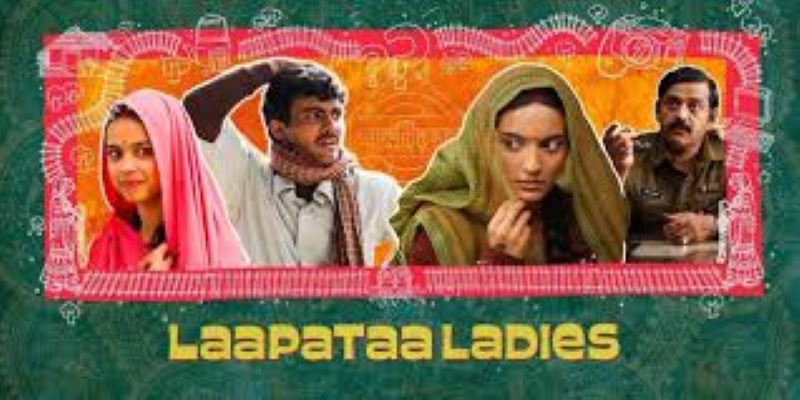
Movies like Laapta Ladies come once in a while. At a time when Bollywood films often rely on excesses of sex and nudity to attract audiences, this film stands apart with its simplicity, warmth and meaningful storytelling.
Frankly, I didn’t have very high expectations from Laapta Ladies. The title itself confused me and when I first tried to watch the film, the opening scenes put me off. It reminded me of a Sharat Chandra Chattopadhyay story in which brides get exchanged when two newly-wed couples travelling in the same boat encounter a storm. Convinced that the story might be inspired by that idea, I logged out of Netflix midway.
However, a few days later during dinner, my college-going daughter began talking about the film.
“I have watched it, Mom. It’s a very nice movie,” she said.
I told her why I had stopped watching it. “They often take old stories and present them as their own,” I said.
Like most millennials, she wasn’t familiar with Sharat Chandra, while I grew up reading authors like Sharat Chandra Chattopadhyay, Rabindranath Tagore, and Premchand. My Hindi teachers in school made sure we read Hindi literature and even dedicated a day to discussing the books we had read. Those discussions sparked a lifelong love for literature.
Today, sadly, the focus in schools seems to be more on English and foreign languages than on Indian literature.
A Refreshing Tale of Women Empowerment
Returning to the film – my daughter insisted, “But Mom, you must watch it. I’m sure you will enjoy it.”
Taking her advice, I logged on to Netflix again. Within fifteen minutes, I was completely drawn into the story.
Laapta Ladies turns out to be a refreshing tale of women empowerment. The film reminds us that empowerment doesn’t always need loud slogans or dramatic revolutions. Sometimes, small actions and quiet courage can bring about powerful change.
Director Kiran Rao deserves full credit for presenting this story with such sensitivity and charm.
While the central idea of a couple getting separated soon after their wedding might echo older narratives, writer Biplab Goswami gives the story its own identity. With screenplay and dialogues by Sneha Desai, the film unfolds beautifully.
Two Brides, Two Journeys of Self-Discovery
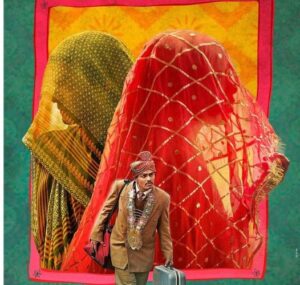
The story revolves around two brides — Jaya and Phool — who get lost early in the film but eventually find not only their homes, but also their true selves.
The performances by the main characters are remarkable. Nitanshi Goel (Phool), Sparsh Shrivastava (Deepak), Pratibha Ranta (Jaya), and Chhaya Kadam (Manju Maai) bring authenticity and innocence to their roles.
While Chhaya Kadam is an experienced actor, the other three are newcomers. Perhaps that is what makes their performances so refreshing — there are no preconceived notions attached to them. Their fresh faces add honesty and charm to the characters they portray.
Deepak is portrayed as an ordinary man with no extraordinary traits. There is no dramatic love story between him and his wife Phool, yet his affection for her is visible in his simple actions and worried expressions.
Phool, on the other hand, firmly believes that her husband must be searching for her. She quietly stands her ground in front of the experienced and somewhat cynical Manju Maai. She doesn’t fight or argue — she simply holds on to her belief.
Jaya’s character is even stronger. Determined to pursue further education, she highlights the importance of education for girls. Through her actions, she empowers not just the women in Deepak’s household but even his parents by introducing them to organic farming.
Manju Maai carries a certain bitterness within her, yet she uses that experience to teach Phool the importance of financial independence for women.
Ravi Kishan’s Memorable Performance
Another standout performance comes from Ravi Kishan as Police Inspector Shyam Manohar.
His character is both humorous and layered. Though he casually accepts money to register complaints, he also shows a sense of justice by helping Jaya escape her abusive husband. Ravi Kishan’s comic timing and screen presence add another engaging dimension to the film.
A Powerful Scene That Breaks Stereotypes
One scene that particularly stood out for me involves Chotu (played by Satendra Soni), Manju Maai’s helper, who brings Phool to the room where he and a beggar named Abdul (Ravi Kapadiya) live.
They simply go to sleep.
Phool doesn’t feel unsafe sharing the room with two men she doesn’t know, and neither of the men behaves inappropriately. In many mainstream films, such a scene would have been used to depict harassment or violence.
Instead, the film sends out a subtle but powerful message — not all men are predators. Many are kind, decent individuals who treat women with respect.
A Film with Messages, But Not a Lecture
Laapta Ladies gently touches upon several important themes — female bonding, women’s education, financial independence, and the questioning of traditions like the ghoonghat pratha.
What makes the film special is that it delivers these messages without sounding preachy. The narrative remains engaging, heartfelt and often humorous.
In the end, Laapta Ladies proves that meaningful cinema does not need loud messaging or grand drama. Sometimes, a simple story told with sincerity can leave the deepest impact.
A truly good film — and definitely worth your time. A must-watch.
