

Dr Vandana Sharma: Transforming Special Education Through Mata Bhagwanti Chadha Niketan in Noida

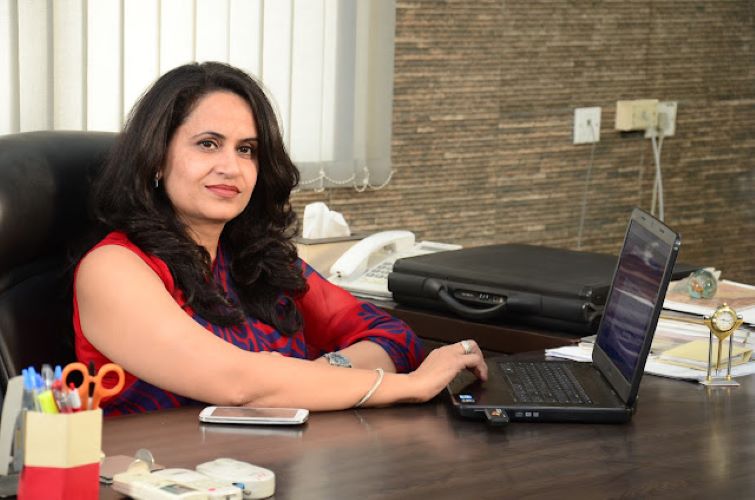
Rajkumari Sharma Tankha
For more than two decades, Dr. Vandana Sharma has dedicated her life to empowering children with special needs. She is the Director and Principal of Mata Bhagwanti Chadha Niketan (MBCN), a charitable school in Noida, Uttar Pradesh, that focuses on the education and rehabilitation of children with multiple disabilities.
Founded by her in 1999 with just 20 students, the institution has grown into one of the country’s leading centres for special education, now serving over 1,000 children with conditions such as cerebral palsy, autism, seizures, visual and hearing impairments and multiple disabilities.
Recognising her remarkable contribution to the field, Amity University honoured her with the Women Achiever Award on International Women’s Day.
In this interview, Dr Sharma talks about her journey into special education, the challenges of working with children with disabilities, and the need for greater awareness and inclusion in society.
Journey into Special Education
How and when did you enter the field of special education? What inspired you to choose this career?
I always wanted to be involved in a profession that allowed me to serve others. During my graduation, I visited a special school as part of an NSS programme. That experience changed my life. I loved volunteering with special children and was fascinated by the challenges involved.
After graduation, I joined the National Institute for the Empowerment of Persons with Intellectual Disabilities (formerly National Institute of Mentally Handicapped) for professional training and topped the batch in northern India. I continued working with children with disabilities while pursuing higher education. After marriage and the birth of my son, I completed my post-graduation and PhD in psychology.
Challenges of Teaching Children with Special Needs
How difficult is it to educate children with special needs, especially when it comes to life skills?
Teaching children with special needs requires immense patience, dedication and empathy. It is not easy, but it becomes meaningful when you are passionate about helping them grow.
Unlike mainstream education, there is no fixed curriculum. Each child requires a customised learning programme based on age, family background, type of disability and learning style. Teaching strategies have to be tailored individually, which makes the process both challenging and rewarding.
One of the biggest challenges we still face is social acceptance. Even after training, many students struggle to integrate into what society calls “normal” environments.
Lack of Awareness in Society
Dr Sharma believes that lack of awareness about invisible disabilities remains a major hurdle.
People are more willing to help those with visible physical disabilities, but conditions such as autism or intellectual disabilities often go unnoticed and misunderstood. According to her, awareness campaigns must go beyond symbolic events like marathons and rallies and focus on real understanding and inclusion.
Supporting Parents of Special Children
Parents often struggle to accept their child’s condition. How do you help them?
Dr Sharma’s PhD research focused on the psychological challenges faced by parents of children with special needs.
Raising a special child brings multiple emotional and financial challenges. Parents often experience shock, denial, depression, frustration, guilt and fear. Medical expenses, social stigma and lack of support can put enormous pressure on families.
“Counselling plays a crucial role,” she says. “I regularly counsel parents to help them cope with stress and empower them to support their children better.”
Government Policies and Implementation
Is the government doing enough for children with disabilities?
Dr Sharma acknowledges that the government has introduced several policies and schemes for children with special needs. However, implementation remains the biggest challenge.
“There is often a gap between policymakers and beneficiaries. While the plans look promising on paper, they frequently fail at the ground level,” she says.
She believes policies must be more practical and accessible so that the intended beneficiaries truly receive support.
Future and Independence of Special Children
Dr Sharma strongly believes that children with disabilities can lead meaningful and dignified lives if given the right opportunities.
Improving the quality of training and creating employment opportunities suited to their abilities are key to enabling them to become financially independent.
“If they fail to become independent, it is not their limitation—it is the failure of our system and society to provide proper training and opportunities,” she says.
Advice for Young Special Educators
For young people considering a career in special education, Dr Sharma has a simple message:
“Working with children with special needs can be challenging, but it is deeply rewarding. Being a special educator is not just about teaching—it is about giving hope and bringing smiles to children who need it the most.”

1 Comment
[…] Persons with disabilities rarely find representation in stories. When we say we are invisible, we mean invisible in data, policy, society, and storytelling. Lack of representation—or incorrect representation—reinforces stigma. It deepens exclusion. […]