

Why Trees Fall in Cities: The Hidden Danger of Concretisation Around Tree Roots
- DIL SE ENVIRONMENT
 Life&More
- 1
- 12 minutes read

Rajkumari Sharma Tankha
In recent years, you must have read or heard news about huge trees collapsing during minor storms, light rains, or moderate winds. One recent incident occurred on Kasturba Gandhi Marg in New Delhi, where a large tree suddenly fell and crushed a parked car.
Fortunately, the driver had just stepped out moments earlier. Had he still been inside, the accident could easily have turned fatal.
Incidents like these are not rare. Every year, hundreds of trees fall in cities across India. But have you ever wondered why this happens so frequently?
The Real Problem: Concretisation Around Trees
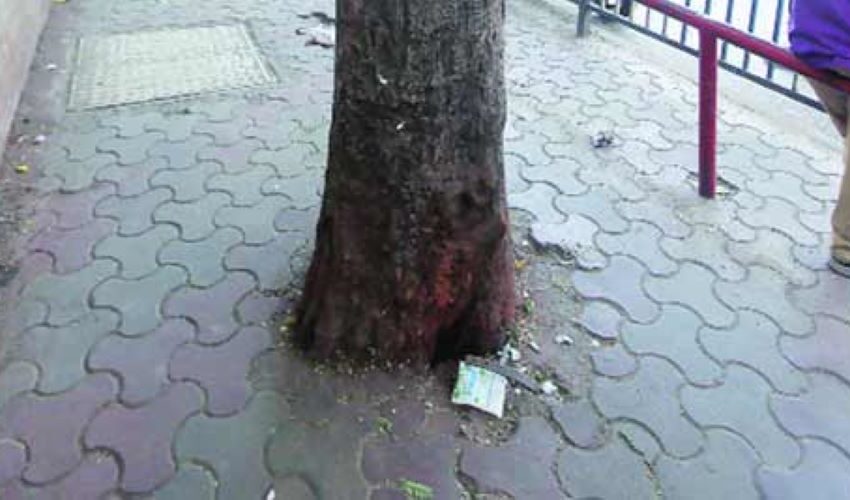
The primary reason lies in a practice carried out in the name of “protecting trees” and beautifying urban spaces—the concretisation of soil around tree trunks.
Across cities, pavements and roadside areas are repeatedly covered with cement, tiles, or concrete. This practice is often justified as a way to improve urban aesthetics. However, in reality, it does nothing to protect trees and may even contribute to their eventual collapse.
Many environmentalists believe that such projects continue because they involve large public works contracts, making them financially attractive for authorities, despite the ecological damage they cause.
Why Concretisation Harms Trees
Trees survive and grow through their roots, which spread both vertically and horizontally beneath the soil. The soil surrounding a tree trunk is essential for:
-
Water absorption
-
Oxygen supply to roots
-
Nutrient intake
-
Root expansion
When this area is sealed with cement or concrete, the tree’s roots lose their ability to breathe and absorb water.
Without proper water percolation and soil aeration, the roots gradually weaken. Over time, the tree becomes unstable and may collapse during strong winds or mild storms.
Slow Damage That Weakens Trees
Concretisation causes multiple forms of damage to trees and soil.
-
It destroys superficial roots, which play a vital role in stabilising the tree.
-
It damages the fertile topsoil, which contains important nutrients.
-
During summer, heated cement surfaces dry out and stress tree roots.
-
During the monsoon, water often collects in cracks between tiles, leading to root rot.
This combination of heat stress, lack of oxygen, and excess stagnant water slowly weakens the tree’s root system.
What the Rules Actually Say
According to horticulture experts, a minimum open soil area of 36 square feet—roughly six feet on each side of the tree trunk—should remain free of cement or tiles.
This open space allows:
-
Rainwater to reach the roots
-
Air circulation in the soil
-
Proper root expansion
However, if you walk along pavements in most cities, you will notice that this guideline is rarely followed.
The Bigger Urban Problem
Concretisation doesn’t just harm trees—it also creates serious urban environmental problems.
When pavements and roadsides are completely cemented:
-
Rainwater cannot seep into the ground
-
Stormwater drains overflow
-
Roads get flooded during heavy rains
-
Groundwater levels continue to decline
This is one reason why urban flooding has become more common in many Indian cities.
A Better Alternative: Green Pavements
Clean pavements are necessary for pedestrians, but they do not have to be fully cemented.
Cities can instead adopt green pavements, with:
-
Grass beds
-
Shrubs
-
Trees
-
Permeable soil areas
Grass requires very little maintenance, helps absorb rainwater, and keeps the surroundings cooler.
Another advantage is that grass binds the soil, significantly reducing dust pollution in urban areas.
Rethinking Urban Planning
Instead of surrounding trees with cement, pavements can be slightly raised while maintaining green strips of soil and vegetation.
Such urban design would:
-
Protect trees
-
Improve groundwater recharge
-
Reduce flooding
-
Enhance air quality
-
Make cities more visually pleasing
If cities truly wish to protect their green cover, allowing trees space to breathe is the first step.

1 Comment
[…] also points out that environmental action is often reduced to planting trees without caring for them […]