

WHERE DEVOTION MEETS MOTION
- ARTS & CRAFT SANDIP SOPARRKAR
 Life&More
- 0
- 7 minutes read


One of the young and dynamic breed of dancers who is a distinguished Bharatanatyam dancer, choreographer, and guru with over three decades of dedication to the classical arts is Pavitra Bhat. Trained from a young age, he has performed extensively and is known for his deep storytelling, strong abhinaya, and thoughtful thematic productions.
As the founder of Pavitra Art Visual Institute (P.A.V.I.), he has nurtured several generations of committed dancers. His contributions to dance have been recognised with multiple awards and honors like the Kala Ratna Award, Narthaka Puraskar and more for excellence in performance, choreography, and teaching. Through his work, Pavitra Bhat continues to uphold and creatively expand the rich traditions of Bharatanatyam. He spoke with me about his recent show based on the age-old tale of Ramayana, excerpts from the interview:
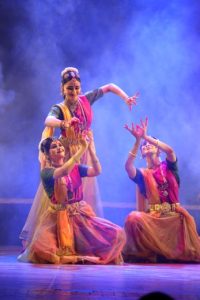
Tell us about your latest production, ParA – Voices of Ramayana.
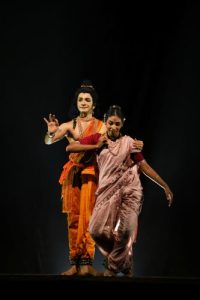
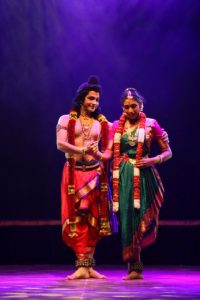
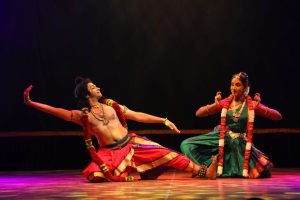
The production explores the Ramayana through voices that often remain unheard, focusing deeply on emotion, devotion, and the human dimension of divine narratives.
The storyline unfolds in the serene aftermath of Rama’s victory over Ravana. Lord Rama and Devi Sita are reunited, yet Sita must undergo the Agnipariksha to prove her purity before returning to Ayodhya for Rama’s grand coronation. Despite her unwavering devotion, societal doubt overshadows her virtue, forcing Rama to banish Sita.
Sita finds refuge in the forest under the guidance of Rishi Valmiki, who reveres her as Vanadevi, the goddess of the woods. In the ashram, she gives birth to twins, Luv and Kush, who grow up immersed in devotion, music, and values. Under Valmiki’s guidance, the boys unknowingly carry forward Rama’s legacy through sankeertan.
The climax unfolds when Luv and Kush confront their father in battle, unaware of their lineage. As truth emerges, the story culminates in a poignant reunion. In the final act of grace, Devi Sita returns to Mother Earth, reuniting with Rama in their divine forms as Vishnu and Lakshmi — symbolising love and devotion transcending mortal realms.
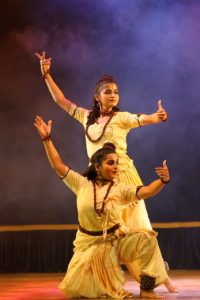
What inspired you to create this concept, and how did you execute it?
The idea was born from a desire to create something meaningful for our senior students, many of whom have trained with us for over 15 years. These dancers are not only dedicated but exceptional artists in their own right. We wanted to bring them together on one platform and celebrate their long artistic journeys.
Initially, this project was conceptualised for a Ramayana festival planned by another institution as part of the Rama Janmabhoomi Utsav. Unfortunately, that event did not materialise. However, Aparna and I felt deeply connected to the idea and decided to pursue it independently.
We were especially drawn to the idea of exploring lesser-known perspectives and voices within the Ramayana. As the creative process unfolded, everything came together organically—from the narrative to the choreography, music, and visual elements. The journey of creating ParA has been immensely fulfilling and spiritually enriching.
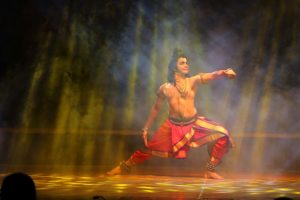
Could you share details of the cast and crew?
The concept, choreography, and costume design were created by Aparna Shastry Bhat and myself. The original music was composed by Shri Vasudev Iyengar, with vocals by Abhishek N.S. The ensemble of musicians included, Mridangam – Satish Krishnamoorthy, Flute – Shri Jayaram, Violin – Shrinidhi Mathur, Sitar – Smt. Suma Rani, Extra sound effects – D.V. Prasanna Kumar, Lighting design – Surya Rao.
The production featured 36 performing artists, along with Aparna Shastry, Jidnyasa Girade, Tanvi Kadam and myself, all wing artists of P.A.V.I. – Pavitra Art Visual Institute.
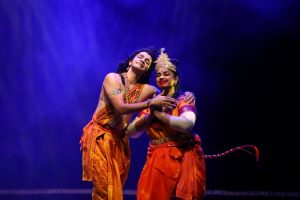
Now that the show has premiered, what are your future plans for it?
Our heartfelt wish is to take ParA – Voices of Ramayana to many more cities and make it accessible to a wider audience. There are a few technical aspects we would like to refine further—enhancing visual elements and tightening the overall presentation.
Productions like these are not just performances; they are powerful mediums to reconnect audiences with India’s timeless stories and cultural heritage. We truly hope to bring this journey into many more homes across the country.
As a male dancer in the classical dance world, have you faced stigma or criticism?
I have been learning dance for 35 years and performed on stage for the first time at the age of nine. I consider myself extremely fortunate to have parents who supported me unconditionally and encouraged me to follow my passion.
Interestingly, I’ve never really faced criticism for being a male dancer—perhaps because of the immense support from my parents, gurus, and friends. At some point, my passion quietly transformed into my profession, and the journey flowed naturally.
I began teaching dance at the age of 18, which gave my parents confidence that dance could also provide a livelihood. Teaching, performing, and learning became inseparable parts of my life.
It’s often said that it’s difficult to sustain a household through dance alone. What are your thoughts?
Believe me—it’s tough. I started teaching full-fledged during college, but my journey began much earlier. Due to family circumstances, I had to support my own dance education and began giving private tuitions as early as 8th grade.
Dance has been my breath and heartbeat since I learned to walk. My parents made countless sacrifices, cutting down on their own needs to support my training and costumes. Their silent strength and belief in me have blossomed into the career I have today.
Yes, earning solely as a performing artist is not easy—but it is love for the art that keeps you going. And for me, that love has always been enough.
