

Reviving Indian Dance-Theatre: Indumati Raman on Bhagavata Mela and Thanjavur Maratha Yakshaganams
- SANDIP SOPARRKAR
 Life&More
- 0
- 7 minutes read


Born into a family deeply connected with music and theatre, Indumati Raman grew up in an environment where artistic traditions were both practiced and patronised. In 1966, she joined the renowned institution Kalakshetra in Chennai, where the founder Rukmini Devi Arundale was still actively guiding its artistic vision.
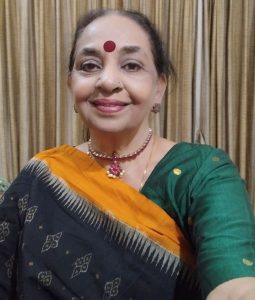
Influenced by Rukmini Devi’s fascination with the Bhagavata Mela natakams—some of which she adapted into dance-dramas—Raman developed a deep commitment to the tradition. Over the years, her journey evolved from performer to mentor, writer, and researcher. This led her to play a key role in reviving and documenting the Bhagavata Mela heritage of Melattur in Thanjavur. Indumati Raman talks about her new book:
Your new book brings attention to a relatively unexplored chapter of Indian cultural history. What is the central focus of the book?
My first book, Bhagavata Mela: My Tryst with Tradition, explored the history of Thanjavur and the ten Telugu natakams composed by Melattur Venkatarama Sastri. While researching and working with the Bhagavata Mela tradition, I encountered another fascinating layer of theatre history connected with the Thanjavur Maratha rulers. In 2002, I produced, staged, and directed a Marathi Yakshaganam titled Sakuntalnatak Yakshaganam, written by Bavasaheb Ekoji II, a Thanjavur Maratha ruler from 1736. That experience sparked my curiosity about the Marathi Yakshaganams composed by the Maratha kings of Thanjavur.
This curiosity gradually developed into deeper research. I began translating another Marathi–Sanskrit Yakshaganam titled Mrutyunjaya Chiranjivi, which narrates the devotional story of Markandeya. My work on these texts eventually led to my second book, Dance-Theatre by Thanjavur Maratha Rajas – Design and Rhetoric of Marathi Yakshaganams. The book examines the artistic vision, literary structure, and dramaturgy of these Yakshaganams and highlights the cultural contributions of the Thanjavur Maratha rulers.
I must also acknowledge the support of the Ministry of Culture, Government of India, which awarded me the National Tagore Fellowship in 2018–19. The fellowship allowed me to conduct extensive research into these Marathi Yakshaganams and the cultural history surrounding them.
Your research also highlights the role of the Thanjavur Maratha rulers as artists and patrons. Please elaborate?
The history of this tradition goes back several generations before Chhatrapati Shivaji and his stepbrother Vyankoji Raje of Thanjavur. Vyankoji Raje I and his descendants ruled Thanjavur for nearly two centuries, and this period witnessed an extraordinary flowering of the arts. Their court became a vibrant centre for dance, music, literature, theatre, and poetry.
Vyankoji’s son, Sahaji Raje Bhonsle II, is particularly significant. He is regarded as the father of the Marathi theatre tradition. He wrote and staged the earliest Marathi play. Further, he also composed several multilingual works that integrated music, dance, and dramatic performance. These plays were not merely compositions but carefully structured theatre works designed for performance.
The Maratha rulers of Thanjavur were highly educated and deeply immersed in classical knowledge systems. They studied Tamil, Telugu, Sanskrit, the Natya Shastra, and other scholarly texts. But, Marathi remained their mother tongue. Many of them were poets, musicians, and scholars. They wrote Yakshaganams but works related to musicology and literature.
Their devotion to Siva-Tyagesa of the Thiruvarur temple also shaped their patronage of temple arts and rituals. They built and renovated temples, encouraged agriculture, improved civic infrastructure, and honoured saints and scholars. Yet the extraordinary artistic contributions of the Thanjavur Maratha period—from 1674 to 1855—have largely remained overlooked. In many ways, this era represents a golden age of dance, music, theatre, literature, and fine arts. So, it deserves much greater recognition.
How did your personal journey become connected with the Bhagavata Mela tradition?
My association with Bhagavata Mela began in 1993 when I was invited to chair the Melattur Bhagavata Mela Sangam. The tradition is a ritual dance-theatre form that has been practiced in the village of Melattur for centuries. Historically, it was performed exclusively within the temple context and had rarely travelled beyond the village.
At the time, I was aware that I was entering a deeply traditional environment. Bhagavata Mela had long been a male-dominated Brahmin temple tradition, and I was conscious that my involvement was unusual. However, I also felt that the survival of the tradition required new forms of engagement and visibility.
My vision for revival was to present Bhagavata Mela outside its village context while preserving its ritual integrity. I believed that wider recognition would help sustain the art. It would also bring attention to the extraordinary dedication of the artists who had preserved it for generations. As a first step, I curated and organised five four-day Bhagavata Mela festivals. These events created a platform for the performers and helped bring the tradition into the cultural spotlight.
Your production of the Marathi Yakshaganam in 2002 was a major milestone. What made that project significant?
The staging of Sakuntalnatak Yakshaganam in 2002 was an experimental and collaborative project. It brought together the traditional Bhagavata Mela artists of Melattur with theatre actors from Mumbai and a contemporary music composer. The idea was to explore how the historic Yakshaganam text could be reinterpreted for modern audiences, while remaining faithful to its spirit.
The response to the production was very encouraging. It was appreciated by the Marathi theatre community as well as by audiences interested in classical theatre traditions. For me, the experience demonstrated that these historical works still possess tremendous vitality and relevance.
Yakshaganams as a dramatic format originated during the Vijayanagar period in the fifteenth century. These later evolved under the patronage of the Thanjavur Maratha rulers. These productions are multilingual, combining dance, theatre, and classical Carnatic music. Traditionally they were performed by Bhagavata Mela actors, who brought together elements of storytelling, music, and dramatic expression.
Sandip Soparrkar holds a doctorate in world mythology folklore from Pacific University USA, an honorary doctorate in performing arts from the National American University, He is a World Book Record holder, a well-known Ballroom dancer and a Bollywood choreographer who has been honored with three National Excellence awards, one National Achievement Award and Dada Saheb Phalke award by the Government of India. He can be contacted on sandipsoparrkar06@gmail.com
