

Art Baithak Revives Intimate Cultural Experiences in a Digital Age
- Performing Arts - Dance, Music, Theatre SANDIP SOPARRKAR
 Life&More
- 0
- 6 minutes read


In an era dominated by digital consumption and fleeting attention spans, the Art Baithak initiative stands as a refreshing return to intimacy, presence, and shared cultural experience. Spearheaded by voice artist and arts patron Mona Shetty under the aegis of the Leela Ghosh Foundation, this initiative is steadily reshaping how audiences engage with the performing arts.
How did the idea of Art Baithak come about?
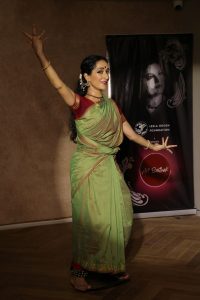
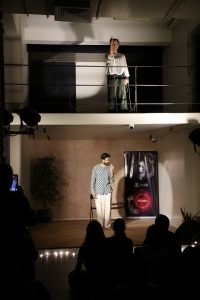
The seed for Art Baithak was planted quite organically in 2022 during a casual conversation between Prachi Saathi and Sumeet Nagdev. Sumeet generously offered his studio space, and the idea of creating an intimate performance setting emerged. The thought was simple yet powerful—what if we could dissolve the traditional barriers between performer and audience?
Initially, it was spontaneous, almost experimental. But as we continued, the purpose became clearer. I noticed a pattern—classical performances often attracted the same limited audience, and people rarely stepped outside their preferred genres. This realization led to a more defined vision for Art Baithak.
We wanted to create something that could generate new audiences for classical arts, bring performances closer to people across the city, and encourage cross-genre exposure. It’s almost like the Swiggy-Zomato model, but for art—we take performances to different neighborhoods so accessibility is no longer a barrier.
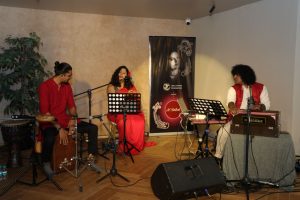
Another key aspect is intimacy. When you sit close to a performer, breathing in the same space, the experience becomes deeply personal. It creates a kind of artistic resonance that large auditoriums often cannot.
And of course, in a time when we’re increasingly absorbed in our devices, these baithaks offer a reason to disconnect digitally and reconnect humanly. After every performance, we host informal interactions over tea, coffee, and desserts, allowing audiences to engage directly with artists. That exchange is invaluable.
How many baithaks have you organised so far, and what has been the response?
Over the past four years, we’ve organized more than 15 Art Baithaks, featuring over 100 artists and reaching an audience of more than 1,200 people across Mumbai, Pune and Bangalore. The response has been overwhelmingly positive.
In the first year, we stayed rooted in one venue—the Sumeet Nagdev Dance Academy. The second year saw us move to Kalari Warriors by Arpit Singh. But by the third and fourth seasons, we wanted to experiment more dynamically with spaces.
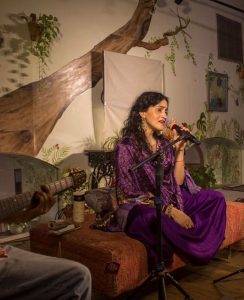
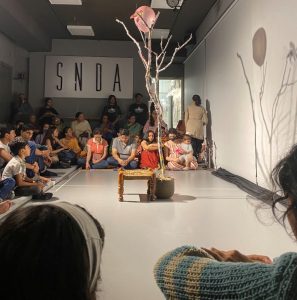
We began exploring unconventional venues—a furniture store, an acting studio, even an open-air garden by the sea in a residential complex. Each setting brought its own energy and attracted a different kind of audience. One of our key collaborators has been The Steps in Bandra, which hosts one of our baithaks every year and introduces us to an entirely new community.
This fluidity of space has been crucial in keeping the experience fresh and expanding our reach.
What kinds of art forms do you showcase?
Art Baithak is truly multidisciplinary. We bring together classical, folk, contemporary dance, theatre, music, poetry, and more. The idea is to create a platform where different art forms coexist and enrich each other.
We’ve had remarkable performers like Madhu Natraj, Sanjukta Wagh, and Amrita Lahiri in dance. Music has ranged from Sufi and ghazals to retro and folk, with artists like Vasuda Sharma and Ronkini Gupta.
We’ve also hosted poetry by Arundhati Subramaniam and theatre performances by groups like Gillo Repertory. Instrumental music, experimental forms like tutting, and storytelling formats all find a place here.
The goal is to offer audiences a rich, layered experience while encouraging them to explore beyond their usual preferences.
What are your future plans through the Foundation?
With the support of the Leela Ghosh Foundation, we have expanding Art Baithak beyond Mumbai. Our vision is to take it to multiple cities, collaborate with local artists, and build micro-communities of art lovers.
We’ve already begun this journey with a successful edition in Pune, where we presented Dashavatar, a multi-style classical dance production, alongside a unique musical experience by the O GaaneWali ensemble, which explored the world of tawaifs and gaane-walis through music and storytelling. We also featured the incredibly talented voice artist Meghana Erande, who brought a completely different dimension to the evening.
We’ve now established a presence in Mumbai, Pune, and Bangalore, and the response in each city has been heartening. The idea is not just to present performances but to nurture a thriving arts ecosystem—one that enlightens, entertains, and connects.
We’re also open to exploring franchise models, so that Art Baithak can grow organically in different regions while retaining its core philosophy.
At its heart, Art Baithak is about creating meaningful, shared experiences—something that feels increasingly rare today. This is just the beginning, and I’m excited to see where this journey leads.
