

Not Just Grades: Rethinking India’s Education System Beyond Marks and Competition
- BOOKS INTERVIEWS
 Life&More
- 0
- 9 minutes read

Saurabh Tankha
In the race to secure admissions in private English-medium schools and prepare children for a world driven by competition and grades, the quality of education in India is increasingly under pressure. Students, teachers, and institutions alike are struggling to cope with this high-performance environment.
However, not all schools follow this path. Some institutions are consciously choosing a different route—focusing on holistic education and overall child development rather than just academic scores.
A Book That Challenges the Status Quo
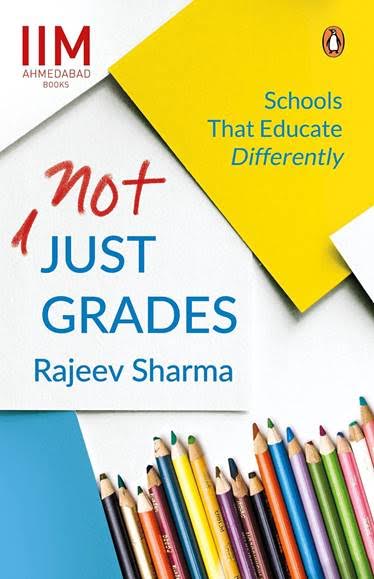
Not Just Grades (Penguin Portfolio), written by Rajeev Sharma, explores this alternative approach to learning. A faculty member at the Ravi J. Matthai Centre for Educational Innovation at Indian Institute of Management Ahmedabad, Sharma brings deep insight into India’s education landscape.
The book highlights 10 schools across India that have successfully combined academic excellence with personal growth, often without access to extensive resources or capital.
Are There More Such Schools in India?
Clarifying the scope of his work, Sharma explains that the book focuses specifically on secondary schools and is not a comprehensive survey.
“There would be several other schools doing excellent work. What is important is that these examples show it is possible to educate children in a way that nurtures happy and responsible adults.”
Can Books Influence Policy and Decision-Makers?
With the abundance of information channels today, Sharma believes that the reach of such research is wide. However, whether policymakers engage deeply with it remains uncertain.
“A researcher’s role is to study and present findings with the hope that those concerned about children’s education will take note.”
What Makes These Schools Different?
The schools featured in Not Just Grades were selected based on key principles:
- Focus on holistic and child-centric education
- Inclusion of children from diverse and underserved communities
- Affordable and accessible education models
- Empowerment of teachers with creative freedom
- Strong engagement with parents and communities
- Proven sustainability over a decade or more
Changing Parental Mindsets
One of the biggest challenges in the Indian education system is parental expectations.
“Parents want the best for their children—but what is ‘best’ has no single answer,” Sharma says.
He emphasises the need for open dialogue between parents, teachers, and children to understand individual aspirations rather than imposing uniform expectations.
The Role of Government Schools
Government schools often face perception challenges, but Sharma points out that wherever quality improves, enrolment naturally rises.
He stresses the importance of giving teachers and school leaders autonomy and support to innovate and improve learning outcomes.
Education in Rural India
Rather than comparing rural and urban education, Sharma believes the focus should be on relevance.
Education in rural areas must:
- Reflect local needs and realities
- Provide awareness of modern developments
- Equip students with skills for sustainable livelihoods
Is the Indian Education System Improving?
While acknowledging the government’s efforts, Sharma highlights the need for continuous dialogue and thoughtful implementation of policies.
Initiatives like digital learning platforms and innovation programmes are promising, but their effectiveness depends on how well they align with real educational needs.
Moving Beyond Rote Learning
Recent discussions around changes in examination patterns, including those by Central Board of Secondary Education, aim to promote analytical thinking and reduce rote learning.
Sharma supports this shift but adds:
“Examinations are just one part of education. True learning requires child-centred teaching, creative resources, and a supportive environment.”
The Road Ahead for Indian Education
When asked about the future, Sharma avoids predictions and instead focuses on intent:
“We must first decide what kind of future we want for our children—and then work towards it.”
Not Just Grades serves as a powerful reminder that education is not just about marks—it’s about shaping individuals who are thoughtful, capable, and socially responsible.
As India continues to evolve, the need to balance academic success with holistic development has never been more crucial
